
When a project manager spends the evening updating logs and chasing responses, the problem may be office capacity. But adding support does not automatically resolve unclear responsibilities or missing project decisions. First separate the work that can be prepared and tracked from the judgment that still needs your team.
Subcontractor office support is most useful when a recurring workflow has identifiable inputs, an expected output, and someone who can review exceptions. It is harder to delegate an instruction such as "keep the projects organized" because neither side can tell where the assignment begins or when it is complete.
Recognize the signs of a capacity problem
- The same information is rebuilt repeatedly. Project status depends on searching inboxes rather than updating a shared record.
- Follow-ups happen only after escalation. A missing response sits unnoticed until it affects a bid, submittal, or project handoff.
- Managers are the only people who can find basic records. Drawings, quotations, and approval history are not consistently filed.
- Administrative work crowds out decisions. Experienced staff spend substantial time copying information, checking completeness, and preparing routine updates.
Compare those symptoms with a decision bottleneck. If an item is waiting for your team to approve a product, price a change, or confirm a technical response, another administrator cannot make that decision for you. Support can make the outstanding choice visible, with the right documents and deadline, so the authorized person can act.
Start with one bounded workflow
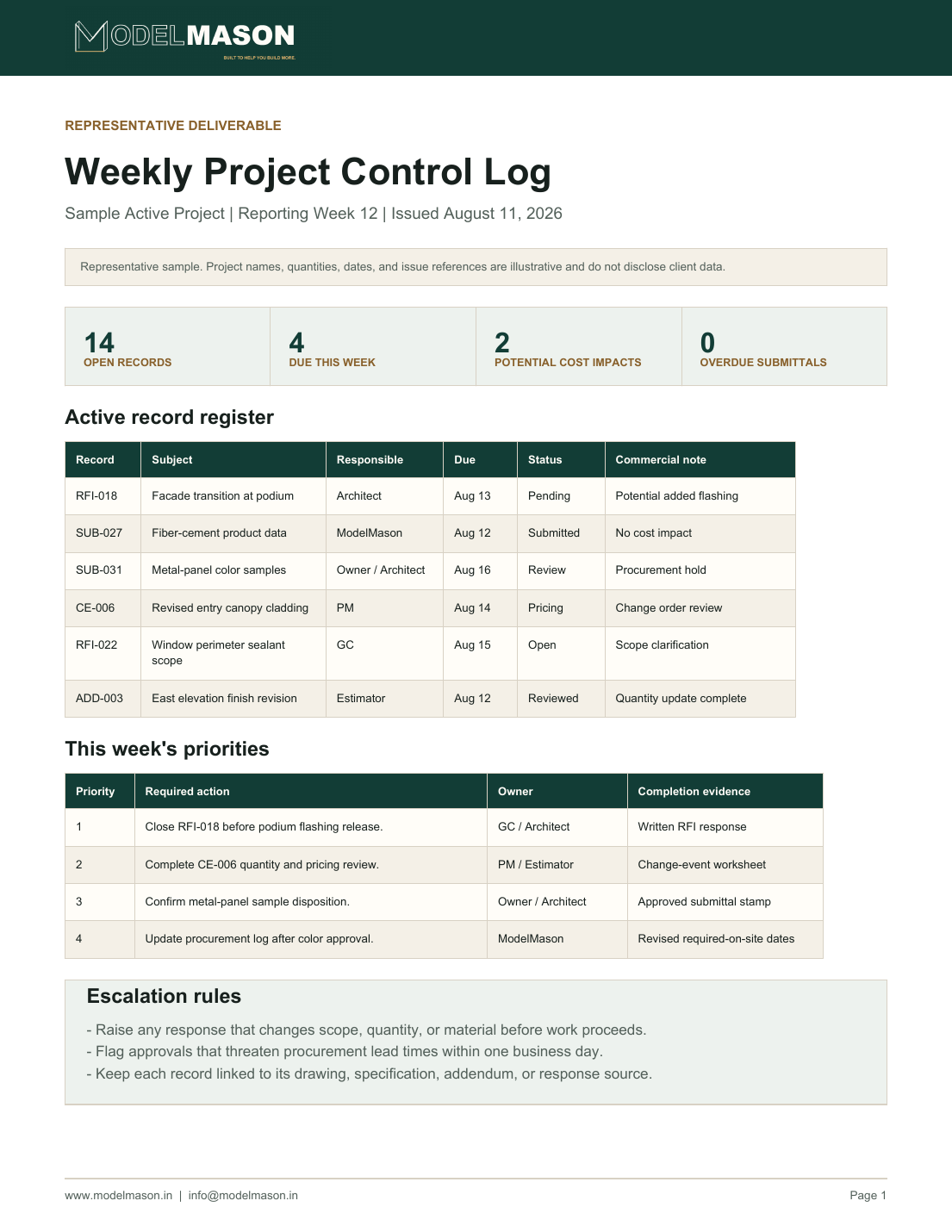
Choose a workload with enough repetition to evaluate. A bid register, a submittal log, or a project document queue can be a better starting point than transferring every office task at once. Write a short brief that answers these questions:
| Part of the brief | Example |
|---|---|
| Input | New requests and responses in an agreed mailbox or project folder. |
| Working output | A register with document reference, status, owner, due date, and next action. |
| Routine responsibility | Check completeness, update the record, and prepare agreed follow-ups. |
| Escalation | Flag missing technical information or an overdue approval to the named reviewer. |
| Approval boundary | Your authorized team approves technical, contractual, pricing, and payment commitments. |
For a bid queue, distinguish administration from estimating. Logging an invitation, organizing the documents, and tracking a vendor response are not the same as measuring quantities or deciding the final price. The estimating service scope guide explains that separation.
Agree access and reporting before work starts
Identify the systems, folders, and records the assignment needs. Use approved accounts and permissions appropriate to those tasks. Avoid sharing one person's password or granting broad access simply because it is quicker. Establish how access is reviewed and removed when the responsibility changes.
Agree who can contact vendors or project participants, which templates to use, and which messages need review. Keep exceptions visible: an updated register should not imply that a payment, change order, or technical response has been authorized.
Evaluate the handoff, not just hours worked
Record the starting backlog and review it at agreed intervals. Useful measures include the age of unprocessed items, missing reference information, overdue follow-ups, the completeness of the working register, and how much rework the reviewer returns. Keep the definitions consistent so a quieter project week is not mistaken for a process improvement.
If you compare costs, include the time your team spends training, reviewing, and resolving exceptions. Flexible capacity can reduce the need for another full-time commitment, but the right arrangement depends on workload, required supervision, and what your existing staff are best placed to own. There is no universal savings percentage.
ModelMason's subcontractor office-support services can begin with a defined recurring responsibility. Use the back-office organization checklist to prepare the workflow, or discuss the queue your team is struggling to maintain. Your team keeps approval authority while the assigned records and follow-ups become easier to review.