Bid register
Track the opportunity, invitation, due date, drawing-set revision, addenda, estimator, quote status, and next action. Office support keeps the queue current; your estimating team reviews scope and approves final pricing.

ModelMason guide / Updated October 13, 2026
Start with one recurring workload, one working register, and clear approval points. Construction back-office support works best when your team can see the current record, the next action, and the person responsible.
Choose the starting record
Track the opportunity, invitation, due date, drawing-set revision, addenda, estimator, quote status, and next action. Office support keeps the queue current; your estimating team reviews scope and approves final pricing.
Record the document number, subject, revision, submission date, response status, responsible person, and due date. Link to the actual documents. Technical and contractual approvals remain with authorized project stakeholders.
Maintain project references, document numbers, received dates, status, missing information, and the approval owner. Tracking invoices is not the same as approving payments, providing accounting advice, or authorizing bank transactions.
Keep decisions, open questions, potential changes, responsible people, and next dates together. Link supporting records so your project manager can review what changed before making a commitment.
Illustrative working record
This example brings RFIs, submittals, changes, owners, and due dates into one view. It uses illustrative data, not confidential client records. Adapt the columns and review rhythm to the workflow you actually assign.
Open the sample project-control log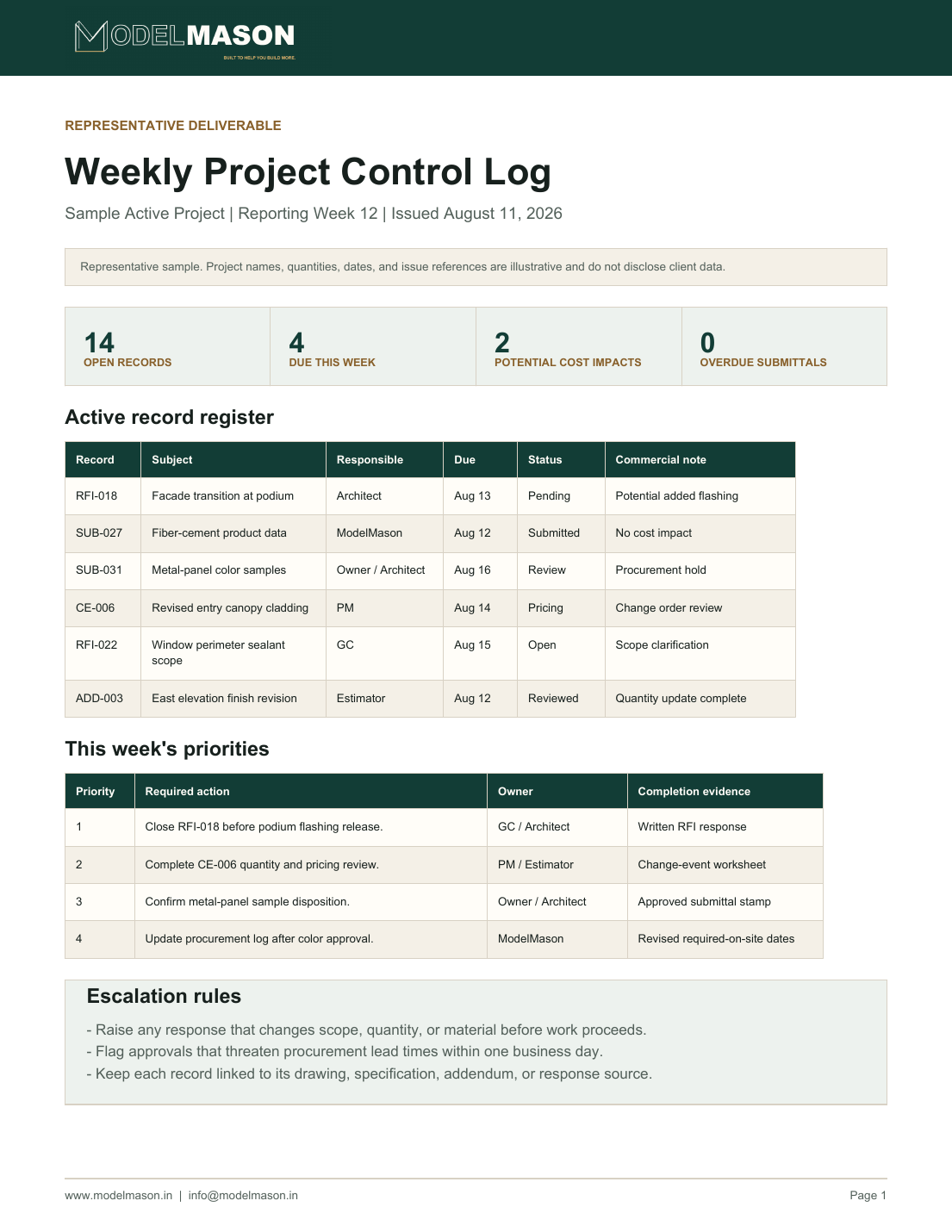
Share your templates, folder structure, backlog, deadlines, and review contacts. Agree the included tasks, reporting frequency, escalation rules, and completion criteria. Grant only the tool access needed for those tasks; do not share unrestricted credentials or payment authority.
Review completed work, overdue items, missing information, and decisions needed from your team. Expand only after the starting workflow is reliable. Keep estimating production, active-project coordination, and routine office records distinct so responsibility is clear.
For measured bid quantities, explore construction takeoff services. For active-job documentation and changes, explore project coordination support.